Madeira is one of the best places in Europe for cetaceans, because deep water starts within a few kilometres of the coast. More than 20 species have been recorded here, and pilot whales, bottlenose dolphins and common dolphins are resident year-round, so there is no closed season.
Trips run about 2 hours from Funchal marina and cost roughly €35 to €54. Go in the morning, when the sea is flattest. One thing to settle before you book: you cannot swim with the dolphins in Madeira, and no legitimate operator will offer it.
Madeira: Responsible Whales and/or Dolphins Watching Tour
Funchal's first WCA-certified operator: a small, fast boat with a marine biologist aboard, the engine cut whenever you get close, and a free repeat trip if nothing shows. Two hours out of Marina do Funchal.
- Marine-biologist guide, small group, fast boat
- Engine off near the animals, WCA-certified
- Free repeat trip if there is no sighting
- Free cancellation up to 24 hours before
Total price from
~€54
Includes taxes and fees
Powered by Blue Safari Madeira
When is the best time for whale watching in Madeira?
There is no wrong month, but there is a best one. The residents are here all year; what changes is how many migratory species pass through and how often the sea lets you out.
| Months | What is around | Sea and crowds |
|---|---|---|
| December–February | Pilot whales, bottlenose and common dolphins | Roughest water, most cancellations, cheapest |
| March–April | Residents plus the first sperm whales | Improving, quiet boats |
| May–July | Widest range: sperm, Bryde's, occasional sei and fin | Calm and warm, getting busy |
| August–September | Peak variety, warmest water | Calmest seas, the best odds |
| October–November | Residents plus late migrants | Still calm, boats emptying out |
September is the single best month if you can choose: the summer crowds have gone, the Atlantic is usually flat, and the migratory species are still around. Blue whales are recorded occasionally in spring but should be treated as a lottery win, not an expectation.
Morning or afternoon?
Morning, almost always. The wind picks up through the day off Madeira's south coast, so an early departure means flatter water, less spray and a boat that is easier to stand up on. Light is better for photographs too, and if you are prone to seasickness the difference between 09:00 and 16:00 is significant.
Can you swim with dolphins in Madeira?
No. Portuguese law prohibits deliberately entering the water to swim with cetaceans, and it applies in Madeira. Trips here are boat-based only.
The same regulations set how boats must behave: a minimum approach distance, a cap on how long any one boat may stay with a group, no approaching head-on or from directly behind, no chasing, touching or feeding, and no night-time trips. Drones and jet skis are not allowed near the animals either.
If an operator advertises swimming with dolphins in Madeira, that is a reason to book elsewhere.
How to choose a responsible operator
The boat type is the first decision, and it is a genuine trade-off rather than a quality question.
- RIB or speedboat: fast, low to the water, gets to a sighting first, and you feel every wave. Best for photographs and for people who do not mind getting wet.
- Catamaran: stable, shaded, has a toilet and space to move. Slower to reach sightings. Better with children or a nervous stomach.
Beyond the hull, four things separate a good operator from a boat ride:
- A biologist or naturalist aboard, not just a skipper with a microphone.
- A hydrophone, so you hear the animals before you see them.
- Engine cut on approach, and a willingness to back off rather than chase.
- A free repeat trip if nothing shows, which tells you they expect to find something.
Certification through the World Cetacean Alliance is the clearest external signal, and the trip in the box above was the first in Funchal to hold it.
What you will actually see
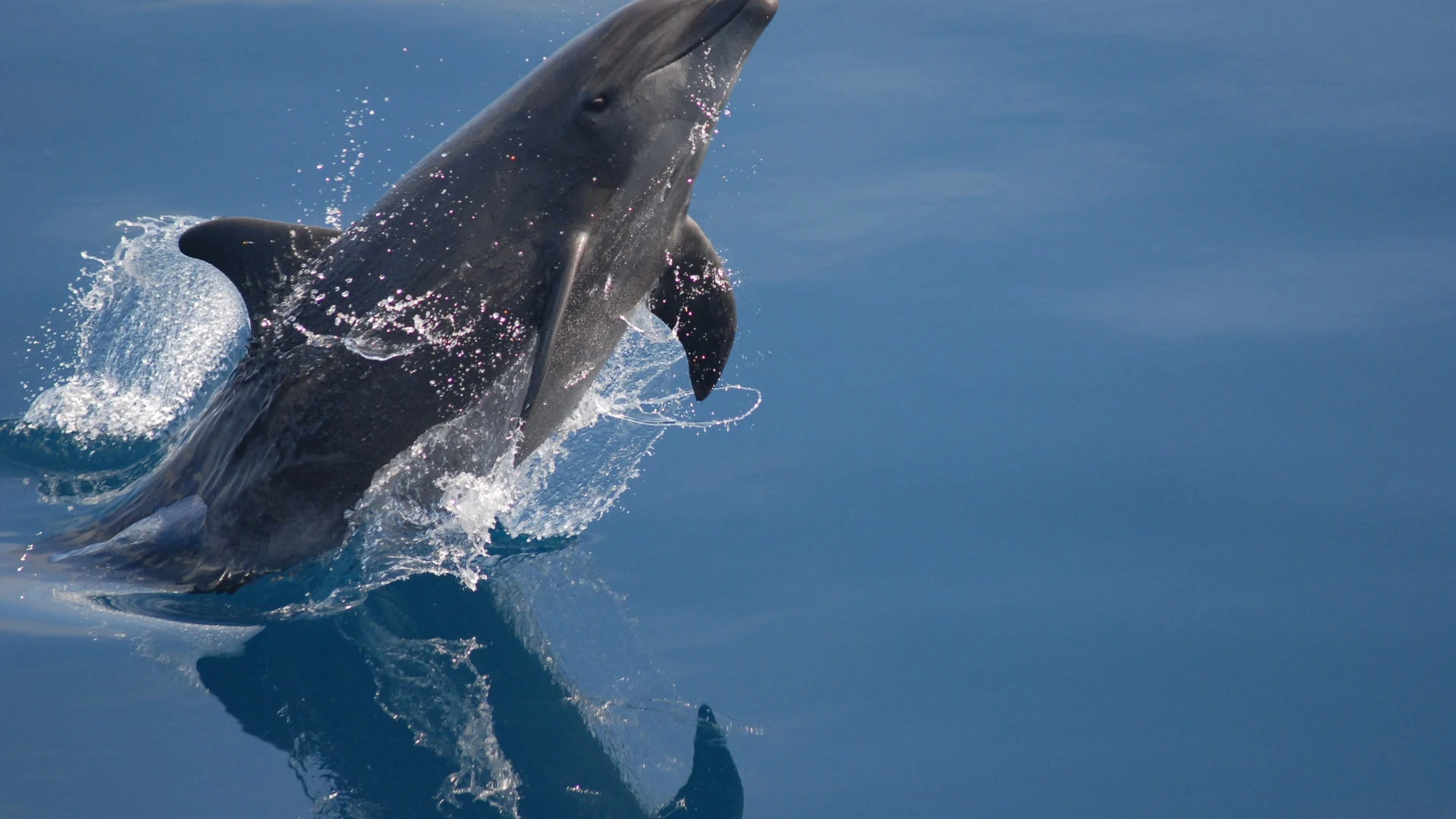
Dolphins, most of the time. Operators generally quote sighting rates above 90 per cent across a season, and the overwhelming majority of those are common, bottlenose or Atlantic spotted dolphins, often in groups of dozens.
Whales are the bonus rather than the baseline. Short-finned pilot whales are the ones you are most likely to meet, and sperm whales are the realistic big-whale sighting between spring and autumn. Loggerhead turtles, flying fish, Cory's shearwaters and the occasional manta round out a normal trip.
Nobody guarantees anything, which is why the free-repeat policy matters more than the marketing.
Where trips leave from
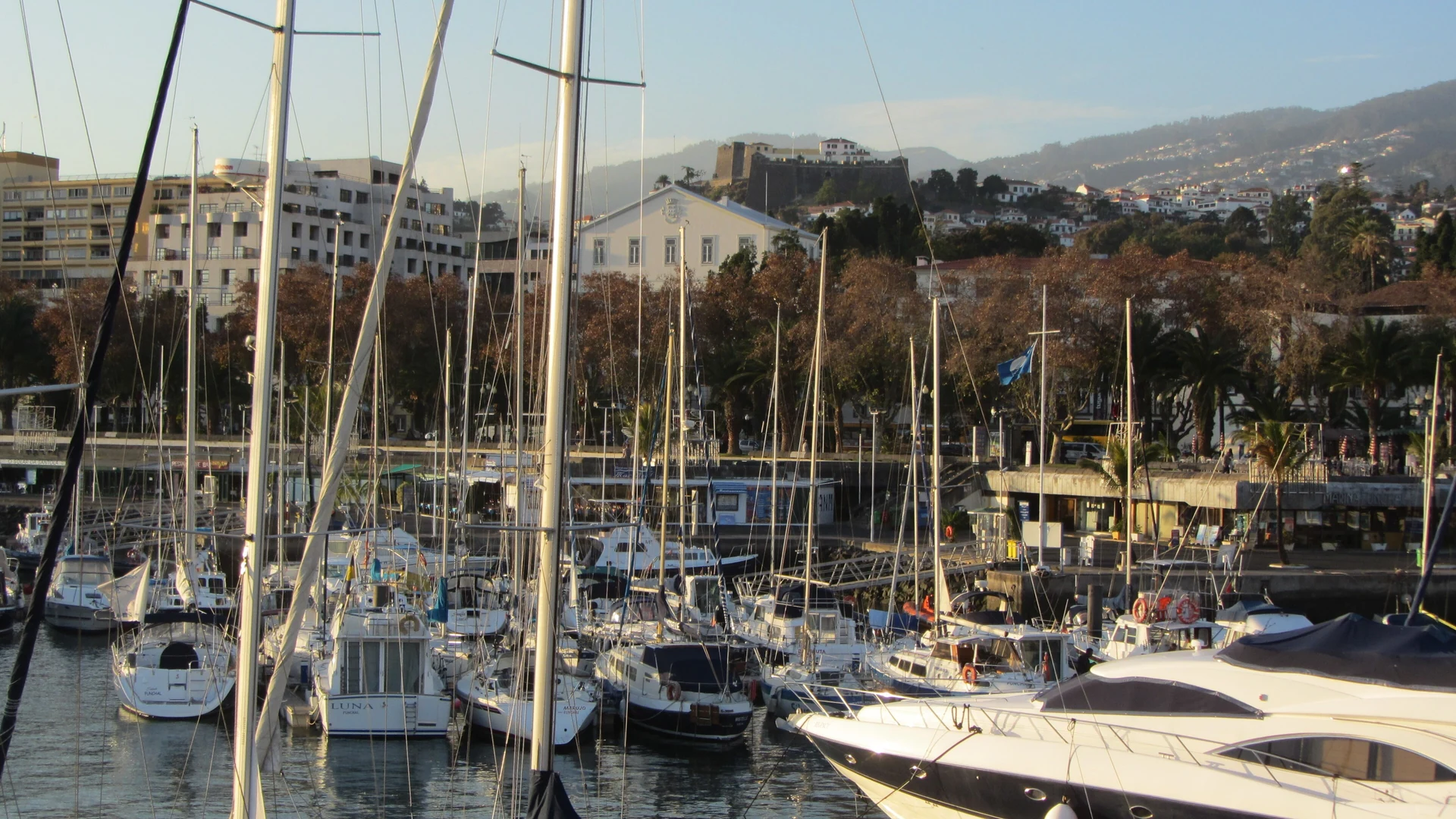
Most boats leave from Marina do Funchal, which is walkable from the old town and where the widest choice sits. Trips also run from Calheta on the south-west coast and from Machico in the east.
Calheta is worth considering if you are staying on that side, because the boats reach different water and cover ground the Funchal fleet does not. Otherwise Funchal is the practical default, and hotel pickup is rarely needed since you can walk.
Whale watching or a sunset catamaran?
Different trips that look similar on a booking page. This is the wildlife outing: a smaller boat, a guide who knows what is under it, and a route decided by where the animals are that morning.
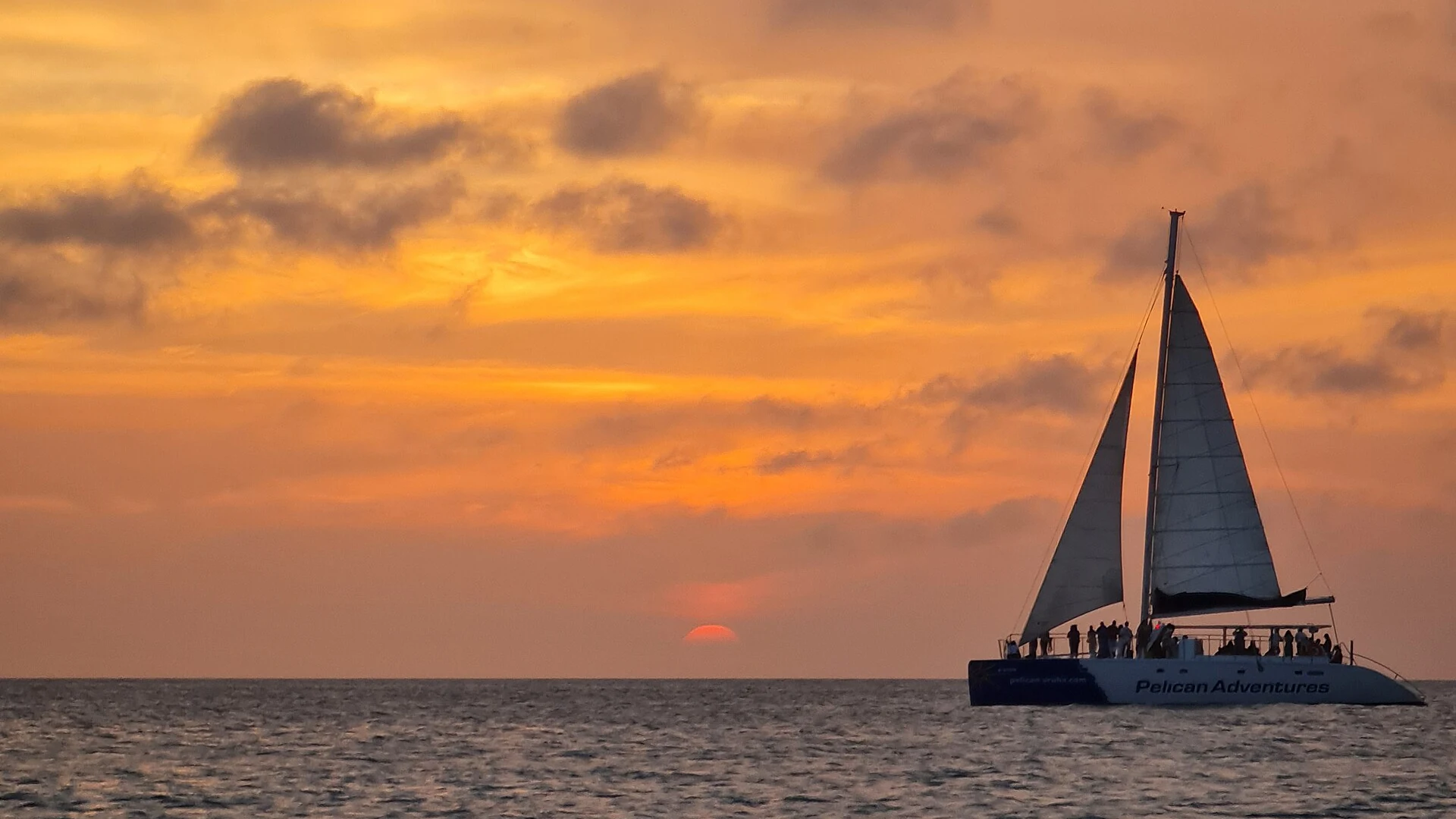
If you want a drink in your hand and the cliffs going gold, book a Funchal sunset catamaran instead and treat any dolphins as a bonus. For a middle option, the Magic Dolphin eco catamaran is the cheapest way onto the water and the easiest with children.
Our best boat trips guide covers the full range, and it is one of the easiest things to slot into a short stay from our things to do in Madeira list.
If you are still deciding between islands, cetacean watching is one of the areas where the two are genuinely close: our Madeira vs Tenerife comparison covers how they differ.
Featured image: Stephen Colebourne / Wikimedia Commons / CC BY 2.0