A Funchal food tour is a four-hour guided walk through the old town and the market, at around €93 per person: small groups, several sit-down tastings and the history between stops, and you will not need dinner afterwards. It is worth it for a local's picks and the stories behind the food; if you would rather graze the market yourself for a fraction of the price, the DIY route is further down.
What you actually eat
The line-up varies by operator and season, but the Madeiran canon is short and every decent tour hits most of it.
- Bolo do caco: a flat wheat bread cooked on a hot basalt stone and served split, drowned in garlic butter. The island's single most-eaten thing.
- Espetada: beef cubed onto a bay-laurel skewer and grilled over wood, traditionally hung from a stand at the table so it drips onto the bread below.
- Lapas: limpets grilled in the shell with garlic butter and lemon, eaten with a fork straight off the pan.
- Bolo de mel: a dark, dense spiced cake made with sugar-cane molasses, cut by hand rather than sliced with a knife.
- Poncha: aguardente de cana, honey and citrus, stirred with a grooved wooden mexelote. One is pleasant, three is a decision you will revisit.
- Madeira wine: the fortified wine the island exports, usually a dry sercial or a sweet malmsey to show the range.
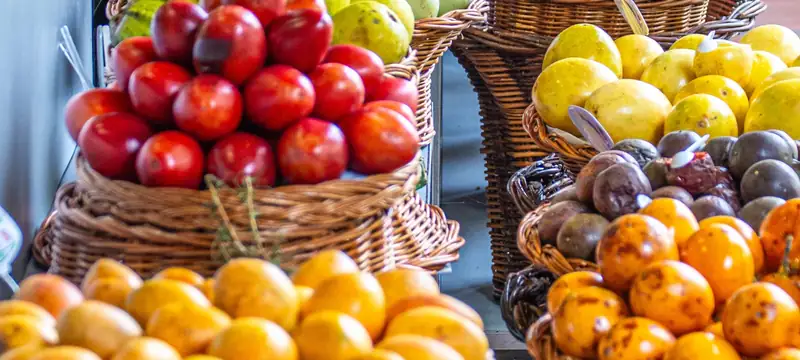
- Tropical fruit: custard apple, tamarillo, passion fruit and the small red pitanga, tasted at the market.
Most tours run six to eight stops across four hours, alternating standing tastings with two or three sit-downs.
What it costs, and is it worth it?
Around €93 is a lot next to a €15 lunch, and it is fair to be sceptical. Here is the honest accounting: you are paying for a guide who eats here, a small group, access to stalls that will not bother explaining themselves to a passing tourist, and not having to choose. The food itself is maybe a third of the ticket.
That makes it good value for some people and poor value for others. It works well on a first full day, because you leave knowing what everything is and where to go back to for the rest of the week. It works well if you like the social side of eating with strangers and asking questions.
It is a poor fit if you are on a tight budget, if you already know Portuguese food, or if you would rather eat one excellent long lunch than seven small things while standing up. Sceptics should note the alternative below is genuinely good, not a consolation prize.
Doing a Funchal food tour yourself
You can cover most of the same ground in an afternoon for under €30, and this is the honest DIY route.
Start at the Mercado dos Lavradores in the morning, which is when it is alive. Opening hours catch people out:
- Monday to Thursday: 07:00–19:00
- Friday: 07:00–20:00
- Saturday: 07:00–14:00, the busiest and best morning
- Sunday: closed, as on most public holidays
Upstairs is the fruit, where vendors will hand you slices to taste. Agree a price before accepting a bag, because cut fruit is priced for tourists. Downstairs is the fish hall and the espada, the black scabbard fish caught at depth, which looks like something from a horror film and tastes mild.
From there, walk into the Zona Velha for bolo do caco from a street grill and a poncha in one of the small bars on Rua de Santa Maria. Finish at a wine lodge on Avenida Arriaga for a tasting flight. Our Madeira wine tasting guide covers which lodges are worth the time, and the wider things to do in Funchal guide places it all on a map.
What you lose doing it alone is the espetada, which is a restaurant dish rather than a street one, and the explanations.
Is there a tourist tax in Funchal?
Yes, and people ask about it alongside food costs, so it is worth stating clearly. Funchal charges a municipal tourist tax of €2 per person per night, capped at seven consecutive nights, so a maximum of €14 per guest per stay.
Children under 13 are exempt, as are guests with a recognised disability of 60 per cent or higher. Your accommodation collects it at check-in or check-out, and it is separate from your room rate and from anything you book on a tour.
Fitting it into your trip
A food tour is an afternoon or an evening, and it pairs badly with a big dinner reservation on the same day. Plan it as the meal.
It goes well with a slow morning in the old town and something on the water afterwards, and the Funchal sunset catamaran is the obvious pairing on a different day. If you are compressing a short trip, the Monte toboggan run is the other classic Funchal half-day.
How long is a Funchal food tour?
About four hours on foot, covering the Mercado dos Lavradores and the old town with six to eight tasting stops. Most run in small groups with an English-speaking guide, and several operators also run them in Portuguese, French and German.
What do you eat on a Funchal food tour?
The Madeiran staples: bolo do caco, a stone-baked flatbread with garlic butter; espetada, beef grilled on a bay-laurel skewer; lapas, grilled limpets; bolo de mel, a dark molasses cake; poncha, the local rum, honey and citrus drink; Madeira wine; and tropical fruit at the market.
How much does a Funchal food tour cost?
Around €93 per person in 2026 for a four-hour walking tour with all tastings and drinks included. Cheaper market-only walks exist at closer to €40, and private tours cost more. Most operators offer free cancellation up to 24 hours before.
Is a Funchal food tour worth it?
Yes if you want a local's picks, the context behind the food and a social afternoon, particularly on a first full day when it orients you for the rest of the week. Less so if you are on a budget or would rather eat one long lunch, because the food is roughly a third of the ticket price.
Can you do a Funchal food tour yourself?
Yes, and cheaply. Visit the Mercado dos Lavradores in the morning, then walk to the Zona Velha for bolo do caco from a street grill and a poncha on Rua de Santa Maria, and finish with a Madeira wine tasting on Avenida Arriaga. Expect to spend under €30 and to miss the espetada.
Is there a tourist tax in Funchal?
Yes. Funchal charges €2 per person per night, capped at seven consecutive nights for a maximum of €14 per guest. Children under 13 are exempt, as are guests with a disability of 60 per cent or higher. Your accommodation collects it separately from the room rate.
Photo: Michael Gaylard / Wikimedia Commons / CC BY 2.0


