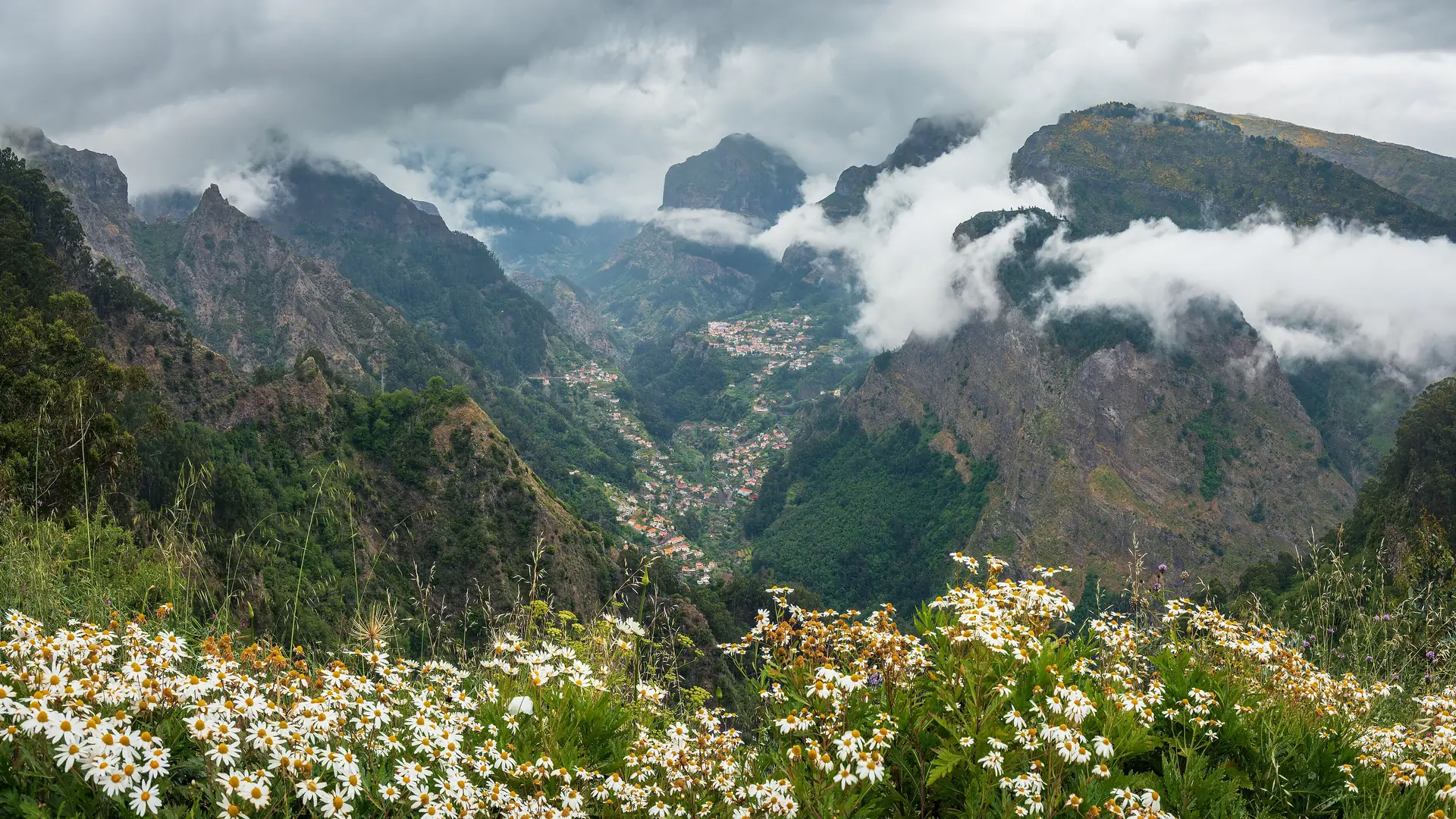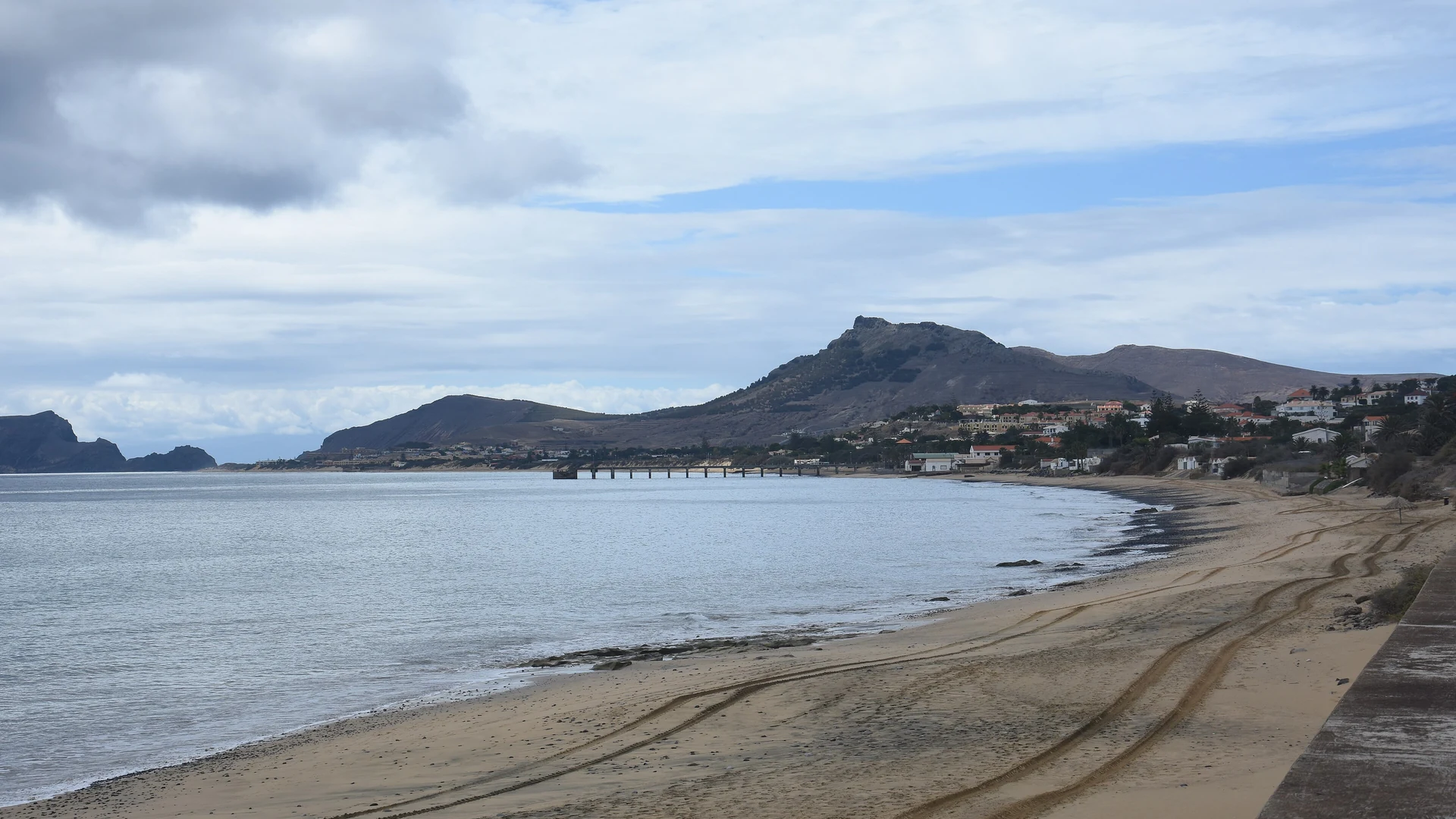
Madeira has almost no natural sandy beaches. The island is volcanic, so the coast is cliff, rock and dark pebble, and the two golden-sand beaches most visitors end up on, Calheta and Machico, are made from sand imported from North Africa. The genuine article is Porto Santo, a sister island with nine kilometres of natural golden sand, two and a half hours away by ferry.
That is the disappointing half. The useful half is that Madeira swims better than it sounds, because lava sea pools do the job beaches do elsewhere: sheltered, clear, often free, and open when the open Atlantic is not. Below is every spot worth the drive, what it costs and when the water is actually warm.
Does Madeira have sandy beaches?
Madeira has four kinds of place to swim, and only one of them is a conventional sandy beach. Calheta and Machico have golden sand that was shipped in and is held in place by breakwaters, which makes them the calmest and most child-friendly water on the island. Seixal and Prainha have natural sand, but it is black volcanic grit and fine copper respectively, and both are small.
The third kind is the sea pool: lava basins, some municipal and staffed, some entirely wild. The fourth is Porto Santo, which is a different island and a different holiday. Most visitors end up doing a mix of the second and third.
Madeira's beaches and sea pools at a glance
| Spot | Type | Cost | From Funchal |
|---|---|---|---|
| Porto Santo | Natural golden sand, 9 km | ~€68–81 ferry return | 2h30 by ferry |
| Calheta | Imported golden sand | Free | ~50 min west |
| Machico | Imported golden sand | Free | ~30 min east |
| Seixal | Natural black sand | Free | ~50 min north |
| Prainha (Caniçal) | Natural copper sand | Free | ~40 min east |
| Porto Moniz pools | Municipal lava pools | ~€3 adult | ~1h30 north-west |
| Cachalote pools | Free lava pools | Free | ~1h30 north-west |
| Poças das Lesmas | Lava pools, lifeguarded | €2.50 non-residents | ~55 min north |
| Doca do Cavacas | Lava pools | €2 adult, €1 youth | 10 min west |
Porto Santo: the golden-sand island
For the real thing you leave Madeira. Porto Santo's beach runs almost the entire south coast of the island, nine unbroken kilometres of soft golden sand with water that shelves gently enough for children, and the sand itself has a long local reputation for its therapeutic mineral content.
Getting there is the planning part:
- Ferry operator: Porto Santo Line, from Funchal
- Crossing: about 2 hours 30 minutes each way
- Return fare: roughly €68–81 in tourist class, varying by season
- Departure: typically around 08:00 from Funchal, with check-in about 45 minutes earlier
- Return: late afternoon, giving six to eight hours ashore on a day trip
- Alternative: a flight of about 25 minutes, at a higher fare
A day trip works but spends five hours of it at sea. An overnight at one of the Porto Santo hotels turns the same journey into an actual beach holiday. If you would rather not organise it yourself, the Porto Santo day cruise bundles the ferry, a guided island tour and hotel pickup in Funchal.
Calheta: the best sand beach on Madeira itself
Calheta, on the sunny south-west coast, is the most practical place to lie on sand without boarding a ferry. The beach opened in 2004 using golden sand imported from North Africa, held between two breakwaters that keep the water flat and shallow. That engineering is exactly why it works for families.
It is free to enter, with sun loungers and parasols for hire, a bar, changing rooms, a first-aid post and lifeguards on duty in season. It is compact rather than sweeping, so arrive early on summer weekends. Calheta is also the one part of the island where a family can book a hotel directly on the sand, covered in the family hotels guide.
Seixal and Prainha: black sand, copper sand, no charge
On the north coast, Seixal has a beach of natural black volcanic sand under green cliffs and waterfalls. It is free, striking to look at and swimmable on a calm day, and it sits about 40 km and 40 to 50 minutes from Funchal via the VR1 and the ER101 through São Vicente. Parking is very limited, so arrive early or accept a walk.
Prainha, near Caniçal in the east, is Madeira's best-known natural sandy beach, a small bay of fine copper-coloured sand inside a protected geosite on the way to Ponta de São Lourenço. It is free, reached by a steep paved path down from a clifftop car park, and exposed enough that waves can be lively. Both fold neatly into a west-coast or east-coast driving day.
Just west of Seixal, the Poças das Lesmas lava pools charge €2.50 for non-residents, a fee introduced to fund lifeguard cover. The beaches themselves stay free.
Porto Moniz: the volcanic pools worth the drive
The north-west corner has Madeira's most photographed swimming, where black lava has set into a natural pool complex with the Atlantic breaking just beyond the rim. There are two separate pool areas, and visitors regularly confuse them:
- Municipal pools (Piscinas Naturais): ~€3 per adult, open 09:00–19:00 in summer and 09:00–17:00 in winter, with a children's pool, playground, changing rooms, bar, first-aid post, car park and step-free access
- Cachalote pools: beside the Cachalote restaurant, free, wilder and rockier, with no facilities and no lifeguard
Pay the €3 if you have children or want somewhere to change. Take the free pools if you want the rawer version and can manage bare rock. On days with a big northern swell both close, which is worth checking before committing to the drive over from Porto Moniz village.
Doca do Cavacas: the easiest swim from Funchal
Ten minutes west of central Funchal, past the Lido, Doca do Cavacas is a small set of lava pools cut into the rock at the sea's edge, and the answer for anyone staying in the city without a car. Entry is €2 for adults and €1 for young people, free for under-10s, and there is a half-price rate in the final hour before closing if you only want a quick dip.
For clearer water and more to look at, the calmest swimming near the capital is by boat. The Garajau marine reserve kayak and snorkelling trip paddles out from Caniço into protected water where the fish come close, which beats any beach day on the south coast.
When is the sea warm enough to swim in Madeira?
Madeira's sea is mild rather than tropical, and it lags the air by a season. It bottoms out around 18°C in January and February and peaks near 24°C in August, and most swimmers find it comfortable without a wetsuit from June onwards, when it reaches roughly 21°C.
The practical swimming window is July to November, which is longer than most visitors expect. September is the sweet spot: the water is still at its warmest, the summer crowds have thinned and rates drop. Porto Santo peaks slightly later again, at 23–25°C through September and October.
For the month-by-month picture, see the best time to visit Madeira guide, and remember that the island's headline act is the levada walks, with swimming as the reward at the end.
Featured image: PaterMcFly / Wikimedia Commons / CC BY 3.0