Madeira for scenery, hiking and quiet; Tenerife for sand, resorts, nightlife and a lower bill. Both work as winter sun, but the numbers are not identical: Funchal averages ~19–20 °C by day in December, southern Tenerife ~20–22 °C, and Tenerife's south is markedly drier while Madeira is greener and more changeable.
They are also not the same place in any sense people assume. Madeira is Portuguese and sits ~500 km north of the Canary Islands, which are Spanish – different countries, different archipelagos, and no convenient direct flight between them. You pick one.
Madeira vs Tenerife: the short answer
Pick Madeira if you want to walk. The levadas, the peaks and the laurel forest are the trip, the scenery is relentless, and the island is quieter than anywhere comparable in the Canaries. You accept that you will swim in sea pools rather than off a beach, and that the weather does what it likes.
Pick Tenerife if you want to lie down. Real sand, real resorts, more flights, more nightlife, cheaper packages and the most reliable winter beach weather in the eastern Atlantic. You accept that a large share of the south is built up and arid, and that you are one of several million visitors a year.
The honest caveat runs both ways. Madeira is not a beach island and never becomes one; Tenerife is not a wilderness, though Teide and the Anaga hills genuinely are. Anyone who wants both sand and mountains is choosing which one to compromise on.
The mistake to avoid is booking Madeira for a beach week. It is the most common source of disappointment on the island, and no number of sea pools fixes it.
Are Madeira and Tenerife even the same kind of place?
Madeira covers ~741 km²; Tenerife ~2,034 km², so Tenerife is roughly 2.7 times larger. Both are volcanic Atlantic islands with a mild year-round climate, and the similarity mostly ends there.
Tenerife is the largest of the Canary Islands and is dominated by Teide, at 3,715 m the highest point in Spain. Madeira's highest is Pico Ruivo at 1,862 m – less than half as high, but sitting in a much smaller island, which is why Madeira feels vertical everywhere while Tenerife has room for a mountain and a coastal plain.
Getting between them is the awkward part. There is no reliable direct flight between Madeira and Tenerife – seasonal services have existed, but connections normally route via Lisbon, Madrid or Gran Canaria, which turns a hop into a travel day.
Both are around 4 hours from the UK, and the hop between them is only about 1.5 hours in the air – less than the time you lose connecting through Lisbon.
Weather: which is better in winter?
This is the question most people are actually asking, and the answer is narrower than the marketing suggests.
| Madeira (Funchal) | Tenerife (south) | |
|---|---|---|
| Daytime, Dec–Feb | ~19–20 °C | ~20–22 °C |
| Sea, winter | ~18 °C | ~19–20 °C |
| Rain | More, and more changeable | Less, notably dry in the south |
| Reliability | Four seasons in a day inland | The steadier beach bet |
Tenerife's south wins a December beach holiday on the numbers, by a degree or two of air, a degree or two of sea, and a good deal less rain. Averages vary between sources, so treat the ranges rather than the midpoints as the fact.
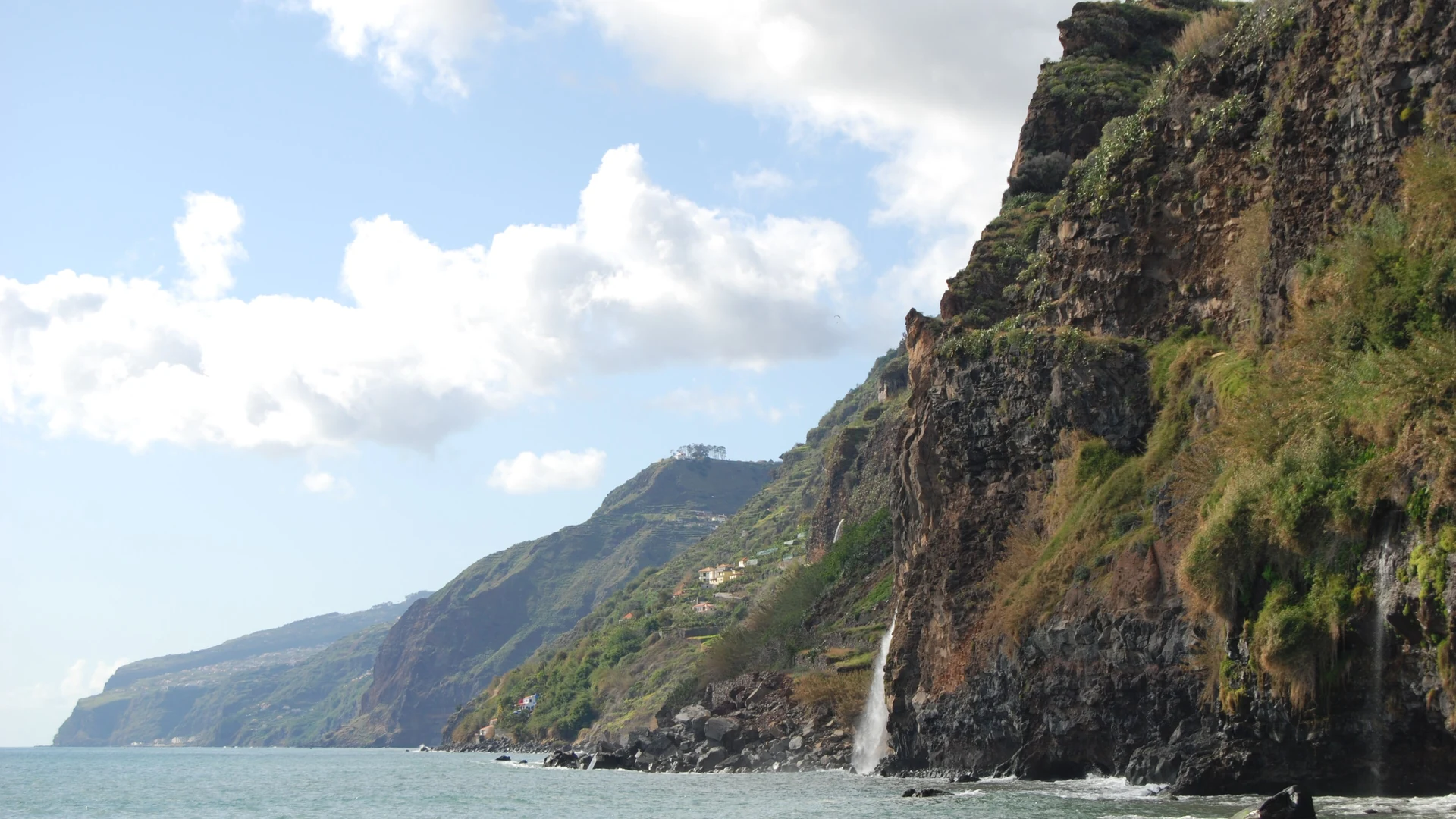
Madeira's weather is regional rather than seasonal. Funchal on the sheltered south coast stays mild while the north coast is wetter and the mountains do something else entirely – it is genuinely possible to have rain at Ribeiro Frio and sunshine on the Funchal promenade on the same morning.
That variability is a problem for a beach week and an asset for a walking one, because you drive to the weather.
By March the comparison flips for a lot of people. Both islands are warming, Madeira's flowering season is starting, and the walking is at its best before the summer heat arrives.
Tenerife is still the warmer of the two, but the margin that decides a December beach week matters much less in spring – and the case for Tenerife weakens as soon as the trip stops being about lying still. Madeira's own month-by-month detail is worth reading before you commit to dates.
Beaches and swimming
Tenerife wins on sand, and it is not close. Playa de las Américas, Los Cristianos and El Médano are proper resort beaches with the infrastructure to match, alongside black-sand coves elsewhere on the island.
Madeira has almost no natural sand. You swim in sea pools – Porto Moniz on the north-west coast, Doca do Cavacas near Funchal – or in small pebble and black-sand bays, most of which are functional rather than lovely. The island's swimming spots are covered in the Madeira beaches guide, and it is an honest guide rather than a flattering one.
Some of Tenerife's golden sand was engineered rather than found – Playa de las Teresitas near Santa Cruz is the well-known example, built up with imported sand, because the natural shoreline of both islands is volcanic grey-black.
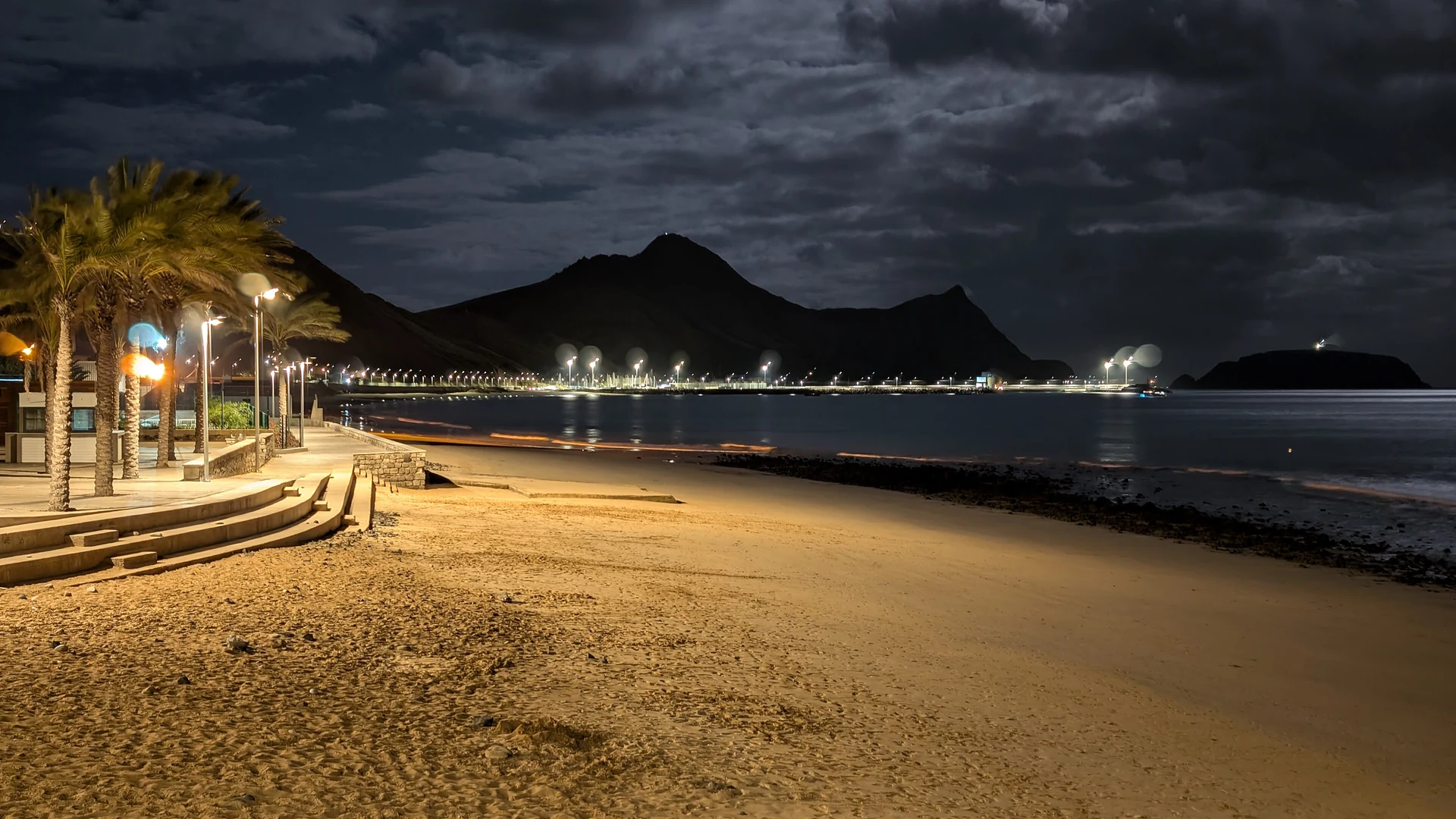
The exception is Porto Santo: 9 km of golden sand, ~2h15 away by ferry. It is a genuine beach island and it is why Madeirans go there for their own holidays – but it is a ferry crossing or a short flight, not a walk from your hotel.
Hiking and nature
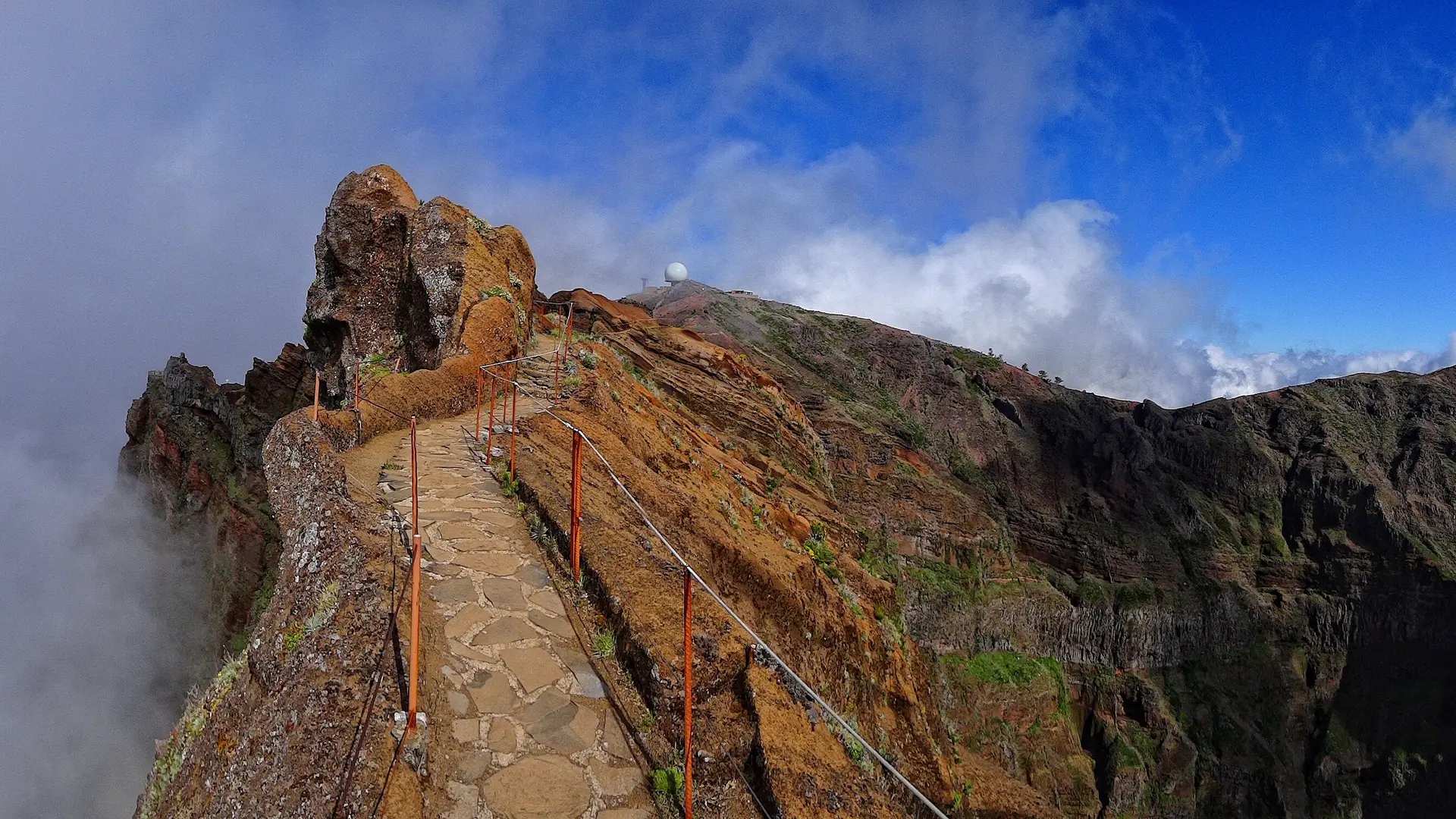
Madeira wins clearly, and this is the reason to choose it. The levada network gives you hundreds of kilometres of near-level walking beside irrigation channels through the UNESCO-listed laurisilva forest, and the high route between Pico do Arieiro and Pico Ruivo is one of the best ridge walks in Europe. Walking is the main event, not a day out from the beach.
Tenerife's headline walks are real but fewer. Teide National Park is extraordinary and unlike anything on Madeira, the Anaga hills in the north-east are laurel forest of the same family, and the Masca gorge is a serious descent. The difference is proportion: a large share of southern Tenerife is arid or built up, while almost all of Madeira is walkable terrain.
One practical difference has appeared in 2026: Madeira now charges for its classified trails. Every IFCN-classified PR route needs a pre-booked timed slot, at ~€4.50 per person and ~€10.50 for the Arieiro–Ruivo traverse. Tenerife's equivalent is the free permit for the last stretch to Teide's summit, which is limited and normally booked well in advance. Neither costs much; both ruin a day if you arrive without one.
The practical test is how many days you can fill. On Madeira a fortnight of walking never repeats itself – see the island's best hikes. On Tenerife, three or four outstanding walking days sit inside a beach holiday.
Cost: which is cheaper?
Tenerife is generally the cheaper trip, and the reason is supply rather than local prices. More package and all-inclusive resorts compete for the same customer, low-cost flights are more frequent, car hire is cheaper, and eating out costs less in the resort areas.
Madeira sits mid-range. Fewer megaresorts, more four-star and boutique stock, and a restaurant scene priced for locals as well as visitors. Flights are similar from the UK at around 4 hours to either, so the difference shows up in the hotel and the car rather than the airfare.
The pattern shows up in three places. Accommodation, where Tenerife's all-inclusive supply undercuts anything Madeira offers; car hire, which runs cheaper per day in the Canaries; and eating out, where resort Tenerife beats Funchal, though a village restaurant on either island beats both.
No single percentage is worth quoting, because the gap depends entirely on the type of trip being compared. What is safe to say is the shape: a package beach week costs less in Tenerife, and an independent trip with a hire car narrows the gap considerably.
Which island should you pick?
| If you are… | Pick |
|---|---|
| On a first Atlantic-island trip | Tenerife – easier, cheaper, more flights |
| A family with young children | Tenerife – sand and resort infrastructure |
| After a beach holiday | Tenerife – Madeira cannot deliver one |
| A walker or photographer | Madeira – no contest |
| Looking for nightlife | Tenerife – Madeira is quiet after dinner |
| After a quiet trip | Madeira – far fewer visitors |
| Chasing winter sun on a budget | Tenerife south – warmer, drier, cheaper |
Crowding is the one difference the table understates. Tenerife draws upwards of 6 million visitors a year against Madeira's ~1.4 million – approximate figures, but the ratio is real, and it is the difference between a busy promenade and a resort strip. Season matters as much as the island, and both fill at Christmas, New Year and Easter.
Madeira is the better island; Tenerife is the easier holiday. Which of those sentences matters more to you is the whole decision.
If Madeira is winning, read up on what there is to do, work out where to base yourself, and browse Madeira's tours and activities to see what a week actually looks like.
Featured image: Bjørn Christian Tørrissen / Wikimedia Commons / CC BY-SA 3.0