You do not need experience to go canyoning in Madeira. Level 1 trips are built for first-timers, run about four hours including hotel pickup from Funchal and cost from ~€70, with wetsuit, harness and a certified guide included. The ravines are spring-fed and flow year-round, so the calendar is rarely the constraint. The weather on the day is.
Operators grade the canyons Level 1 (gentle) to Level 4 (technical). Most visitors do Level 1 and are glad they did. Fit, confident swimmers step up to Level 2, where rappels reach 18–20 m and photos and video are usually included. Above that is for people who canyon at home.
Madeira: Beginner Canyoning – Level 1
The most-booked way into Madeira's ravines: waterfall rappels, natural rock slides and plunge-pool jumps, every obstacle with an easy walk-around. Wetsuit and certified guide included, hotel pickup from Funchal.
- Waterfall rappels, rock slides and plunge-pool swims
- Wetsuit, helmet, harness and RNAAT-certified guide included
- Hotel pickup from Funchal · small group, max 10 · age 10+
- Free cancellation up to 24 hours before
Total price from
~€70
Includes taxes and fees
Powered by Be Local Madeira
What is a canyoning trip in Madeira actually like?
A canyoning day (canyoneering, if you are American) starts with a van pickup in Funchal, Câmara de Lobos or Curral das Freiras, then a climb into the mountains and a short walk in to the top of the canyon.
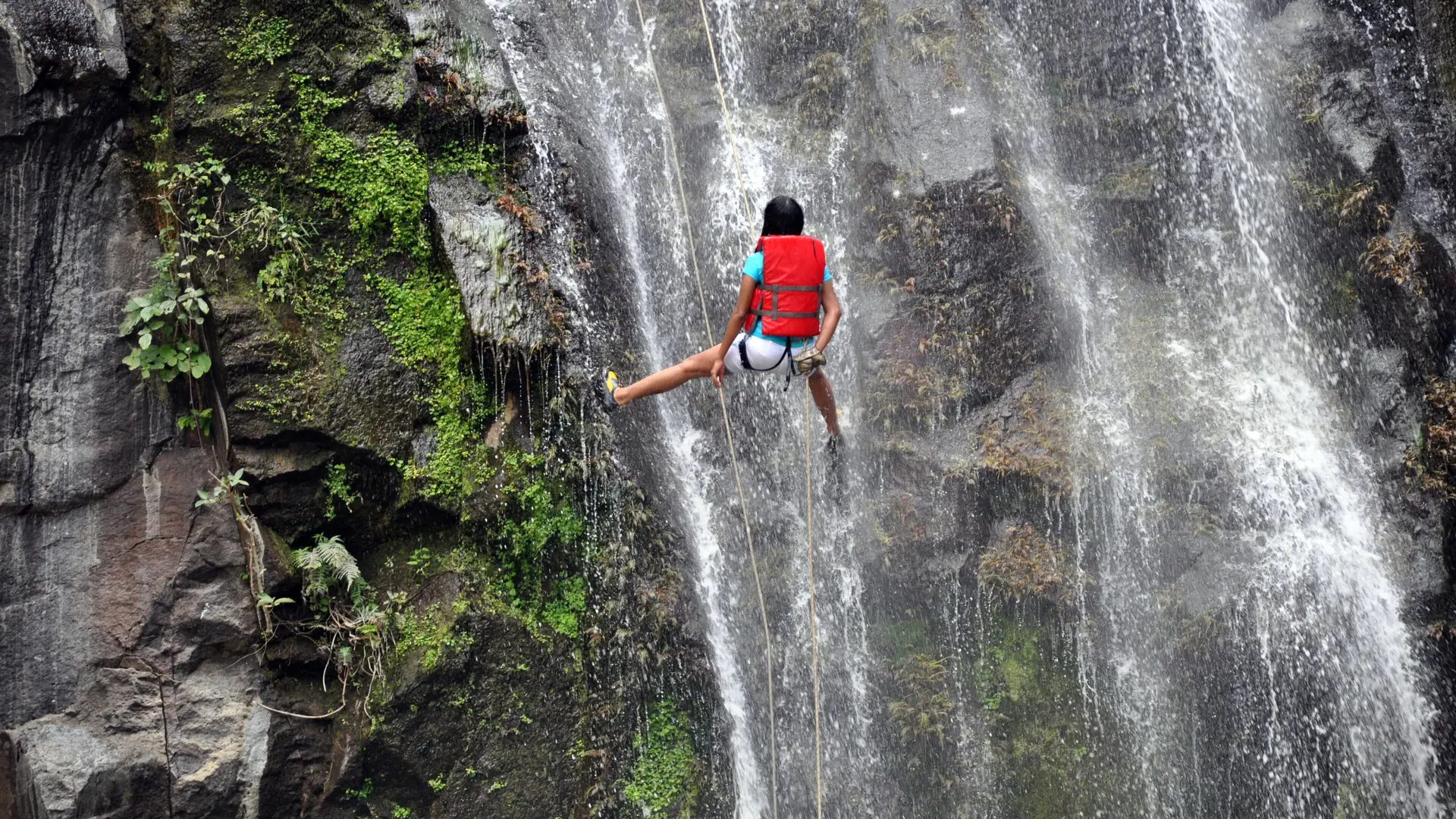
You gear up in the open: wetsuit, helmet, harness. The briefing covers how to sit back on the rope and where to put your feet. Then the guide leads the descent, rappelling waterfalls, sliding rock chutes and swimming plunge pools.
Expect 1.5 to 2 hours in the canyon and four hours all in. The guide rigs every anchor and checks every harness, so nothing technical is on you, and jumps are almost always optional.
Is canyoning in Madeira hard?
Level 1 is not hard. It asks for reasonable fitness, a willingness to get cold and wet, and enough water confidence to float across a pool in a wetsuit. Groups are capped around ten, so you are coached through each obstacle rather than rushed.
Level 2 is a step up in stamina rather than skill: longer routes, more walking on loose wet ground, and rappels you only see the bottom of halfway down.
Reviewers say the same two things. Guides are patient with nervous first-timers, and vertigo is manageable because you are lowered facing the rock, not looking down. If you cannot swim, this is not for you.
Level 1, Level 2 and the harder routes
| Level | Rappels | What it assumes | Who it suits | From |
|---|---|---|---|---|
| Level 1 | Short drops, easy slides, optional jumps | Reasonable fitness, happy in water, age 10+ | First-timers, families with older children | ~€70 |
| Level 2 | Up to 18–20 m, longer descents | Confident swimming, hours on rough ground | Fit first-timers, anyone repeating | ~€80 |
| Level 3–4 | Bigger vertical, some down-climbing | Regular canyoning experience | People who canyon at home | Book direct |
The intermediate Level 2 trip runs inside the UNESCO laurisilva, caps the group at eight and includes photos and video. Level 3 and 4 routes are not sold as walk-up tourist products; you arrange those directly with a specialist.
Where you will go
The classic Level 1 canyon is Ribeira das Cales, in the Funchal Ecological Park, dropping from around Chão da Lagoa at roughly 1,500 m below Pico do Arieiro. It has about five waterfalls, and if you are doing the Pico do Arieiro sunrise you will recognise the road up.
Ribeiro Bonito and Ribeira da Água Negra in Calheta sit at the easier end, Ribeiro Frio is the name most people search, and Ribeira do Lajeado and Rio Verde are intermediate to advanced routes.
Your canyon is decided by water levels on the morning, not by the listing. One correction: Ribeira dos Caldeirões is in the Azores, not Madeira, and search engines conflate the two constantly.
Canyoning or coasteering?
Different sports, same person. Canyoning goes down a freshwater ravine on a rope, in forest, with rappelling as the core skill. Coasteering works along the coast at sea level: salt water, swimming and scrambling between rock platforms, cliff jumps, no rope work.
Coasteering is bookable in Madeira too, mostly from the Caniçal end of the island, and it costs about the same at ~€70 for a half day. Canyoning is the more distinctively Madeiran of the two, because the deep forested ravines are what the island actually has.
How to choose an operator
- RNAAT licence: the legal baseline for adventure-tourism operators in Portugal, carrying the personal-accident insurance the law requires.
- Group size: ten or fewer on beginner routes, or you queue at every anchor.
- Guide language: confirm the briefing is genuinely in English.
- Photos included: standard on Level 2, and it matters when you cannot take a phone in.
- Cancellation: free up to 24 hours, so you can move the day for weather.
The trip in the box above meets all five.
What is included and what to bring
Included: wetsuit, helmet, harness, ropes, guide and Funchal pickup, plus photos and video on most Level 2 departures. Lunch is not.
- Wear: swimwear under your clothes. There are no changing rooms or toilets at the meeting point.
- Shoes: trainers you are happy to soak, not sandals, which come off in the jumps.
- Bring: a towel, dry clothes, and spare contact lenses if you wear them.
- Leave behind: phone, watch and anything you would mind losing in a plunge pool.
When to go
Canyoning runs all year on spring water. The tourism board puts the seasonal logic plainly: in summer the higher-flow north-side rivers are the appealing ones, in winter the quieter south-side rivers. Waterfalls are at their most dramatic in the wetter months, and heavy rain upstream raises levels fast, so a good operator switches canyon or cancels rather than run it.
Is canyoning in Madeira worth it?
Yes, if you are happy to be cold, wet and slightly out of your depth for a morning. It is the best-reviewed water activity on the island, costs less than a half-day boat trip, and is the thing people describe in most detail afterwards.
Skip it if you would rather stay dry. A levada walk threads the same forest and waterfalls from above and is far less weather-dependent. Book canyoning early in the trip and keep a fallback day rather than pinning it to your only free morning. It earns its place near the top of our things to do in Madeira list.
Featured image: Scarleth White / Wikimedia Commons / CC BY 2.0